
WEX, Fuelman, Coast, and the other major fuel card providers all promise savings, tighter controls, and simpler admin. In practice, they work very differently.
Some lock you into specific networks. Others offer wider acceptance but lighter controls. A few now bundle telematics or EV charging, while others stick to fuel-only. And the rebates, fees, and fine print can swing the value dramatically depending on your routes and vehicle mix.
In this guide, we break down several of the most popular fleet fuel cards and compare them across acceptance, savings, controls, security, and the types of fleets they support.
By the end, you’ll see how each card stacks up and why Coast stands out as the most balanced option for fleets that want substantial savings, flexible controls, and protection against fraudulent and unauthorized transactions.
What to Consider When Choosing Your Fleet’s Fuel Card
Choosing the right fuel card can feel overwhelming, especially when every provider offers different networks, rebates/discounts, and features. Based on what will make fleet card use and management easier, here are the key factors to consider.
1. Where your drivers can fuel
Make sure the card works where your drivers already go. A card with limited station access can force drivers to take longer routes or burn extra time searching for the right stop.
2. The rebates you’ll actually earn
Look past the headline numbers. Some cards offer high rebates but only at a small group of stations. Others give consistent savings everywhere. Focus on what your fleet will realistically earn based on your routes.
3. Controls that match your operations
Good controls help you manage spending without slowing drivers down. Look for a card that lets you set limits by driver, vehicle, time of day, or merchant type so you can tailor the rules to your workflow.
4. Fraud protection that catches problems early
Fleet cards are used frequently, so strong security is essential. Features like PINs, driver verification, GPS checks, or real-time transaction declines help stop misuse before it becomes a costly problem.
5. Fees and network penalties
Some cards charge extra when drivers fuel outside the preferred network or use the card for certain services. Read the fine print so you understand the true cost of using the card day to day.
6. Accounting and system integrations
Integrations with accounting, telematics, or fleet management systems can save hours of expense reconciliation and give you clearer insight into card usage and fuel efficiency.
Fleet Fuel Card Reviews: Seven Fleet Gas Cards
1. Coast
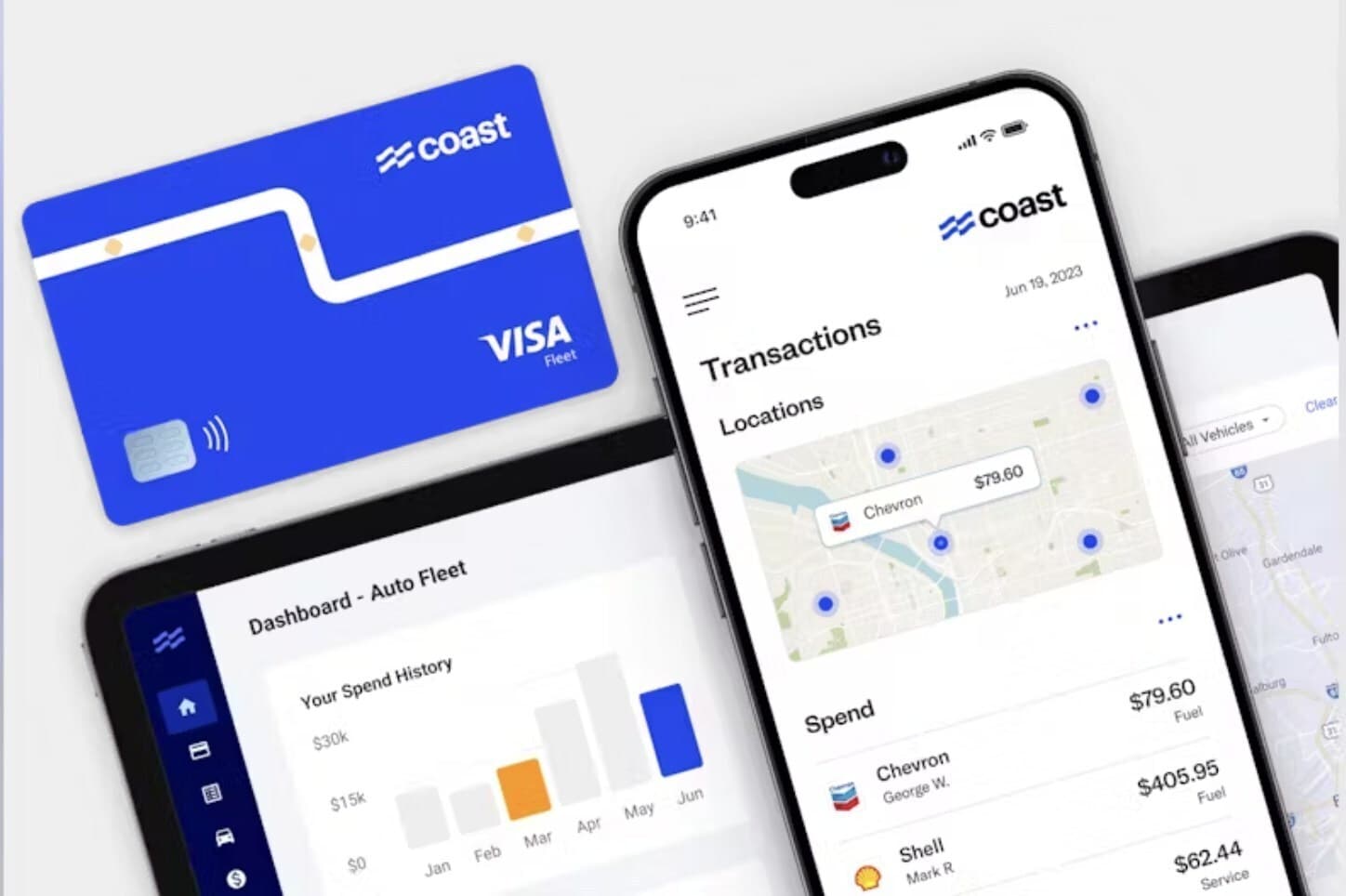
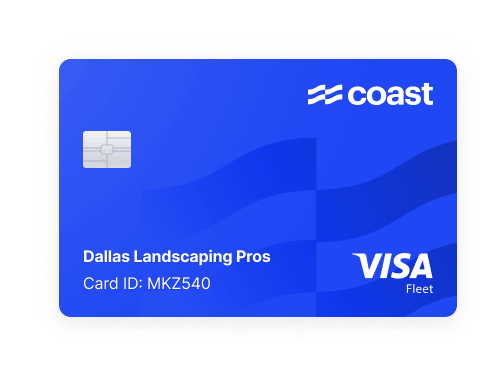
The Coast Card is a Visa fleet and fuel card designed to help businesses manage and control fleet expenses. Unlike some fleet fuel cards that work only at specific stations, Coast works anywhere Visa is accepted, so drivers never have to make detours to find a specific brand station.
In addition to fuel, drivers can use their Coast cards to pay for maintenance, repairs, car washes, parking, tolls, and even travel expenses, as long as managers authorize these purchase categories through Coast’s easy-to-use portal. This keeps spending in one place and makes it easier for managers to track every cost tied to each vehicle or driver.
Coast also helps fleets save money by offering businesses fuel rebates of 3-9¢ per gallon at over 30,000 partner stations. They also get 1% cashback at merchants other than gas stations. This means that businesses save money every time drivers use their Coast cards.
To prevent card misuse, Coast gives fleet managers complete control over how every card is used. They can set rules by card, driver, or vehicle, and restrict purchases based on dollar amounts, days (and times) of the week, and even specific merchant categories.
Security is a crucial part of the Coast experience, with tools designed to stop misuse before it impacts your budget:
- Drivers verify their identity through the Coast app or SMS, preventing card sharing and tying each transaction to the correct person.
- GPS data from connected telematics can automatically decline a purchase if the card is used far from the vehicle’s last known location.
- Suspicious transactions are blocked in real time, reducing the risk of internal and external fraud.
Beyond that, a Fuel Fraud Guarantee of up to $25,000 per year provides added protection when security features are enabled (terms apply).
Coast makes accounting and operations easier as well. It integrates seamlessly with accounting platforms like QuickBooks and NetSuite, allowing teams to automatically sync and categorize transactions.
- Works anywhere Visa is accepted
- Offers 3-9¢ per gallon in fuel rebates at 30,000+ stations nationwide and 1% cashback at merchants other than gas stations
- Allows managers to set limits based on driver, vehicle, dollar amount, schedule, or merchant type
- Security features like GPS-based auto-decline and unique driver verification help prevent fraud at the point of purchase
- Includes a $25,000 annual Fuel Fraud Guarantee for added protection (learn more)
- Integrates with top accounting and telematics tools to automate data entry, tracking, and reconciliation
- Can function as a corporate card with built-in controls at no extra cost
- Comes with an easy-to-use online portal and responsive customer support
- Does not offer a prepaid card option.
- May not provide full value for heavy trucking fleets with specialized needs.
- Less ideal for very small fleets (with fewer than five vehicles).
Is the Coast Fuel Card Worth It?
Yes, the Coast fuel card is worth it for most local commercial fleets, especially those with 10-100 vehicles that operate in industries like construction, electrical work, plumbing, HVAC, landscaping, roofing, pest control, and transportation.
These businesses often need wide station access, flexible controls, and support for various kinds of expenses, which is exactly where Coast stands out.
You can tailor the card to fit how your team already operates, whether that means tightening weekday fuel windows or opening up spend permissions for maintenance, tolls, or travel.
Coast’s security tools, like driver verification and GPS-based checks, also help stop misuse before it becomes a problem when advanced security features are used, giving businesses extra peace of mind.
For fleets that want broad acceptance, competitive savings, flexible controls, and strong fraud protection, Coast is a practical and reliable choice.
2. Fuelman
Fuelman is a fleet card program built to help mixed fleets and government fleets manage fuel and vehicle-related spending. It combines purchase controls, reporting tools, and a large partner network to make fuel management easier.
Fuelman’s Discount Network includes more than 40,000 fueling locations across the United States. When drivers fuel within this network, fleets can earn good per-gallon rebates, which reduces total fuel costs.
Fuelman offers four main card options:
- Fuelman Mixed Fleet – Designed for local and nationwide car and van fleets.
- Fuelman Diesel. Built for truck fleets that rely on diesel.
- Fuelman Mastercard®. Accepted anywhere Mastercard is accepted in the United States.
- Fuelman Public Sector Fuel Card. Designed for government fleets such as police cars, firetrucks, and ambulances.
Every account includes a monthly fee that covers all cards, which helps companies plan their costs across multiple vehicles.
Managers can set spending limits by driver, vehicle type, time of day, or merchant category. Higher-tier plans also include access to Fuelman’s maintenance network.
- Real-time fraud alerts
- Discount network
- Fuel controls
- Some options like customizable dashboards, maintenance, or fraud guarantee are only available on more expensive plans
- Invoices must be paid in full and on time in order to receive rebates
- Extended network fee of $3 for stations outside of their network
Are Fuelman Fuel Cards Worth It?
Fuelman is a good fit for fleets that want different card options tailored to their vehicles and usage patterns.
The Mixed Fleet card works well for car and van fleets, the Diesel card serves truck-heavy operations, and the Public Sector card gives government agencies a dedicated option that many providers do not offer.
Their final option, the Fuelman Mastercard® is useful for fleets that travel widely because it works anywhere Mastercard is accepted.
Overall, Fuelman is worth considering if your vehicles operate mostly within the Discount Network and you want a card option that fits your fleet type.
3. WEX
WEX is one of the largest and most established providers in the fleet payments space. It operates a wide closed-loop network that covers 95% of U.S. fuel stations and more than 45,000 service locations. This reach gives drivers reliable access almost anywhere they travel.
Although WEX powers more than 50 fuel card programs for major oil brands (like Shell, ExxonMobil, Chevron, and Texaco), WEX offers two core card options directly under the WEX brand:
- WEX Fleet Card. This flagship card provides access to the WEX discount network.
- WEX Fleet FlexCard. Unlike the Fleet Card, this card allows users to carry a monthly balance, which is helpful for fleets that face cash flow changes.
Drivers can use WEX cards for fuel and vehicle-related purchases, including maintenance, repairs, tires, oil changes, and parts, at 45,000+ approved service locations.
Fleet managers can control spending on WEX cards through an online portal. There, they can set authorization rules for each card, driver, or vehicle, and limit transactions by dollar amount, time of day, day of the week, or even specific product type.
- Accepted at 95% of gas stations
- Advanced spend controls
- Customizable report options
- Your local station might not accept the card
- Some cards have rebates that expire after a few months
- Rebates are broken into tiers and the amount you save is dependent on how much fuel you purchase in a given month
Are WEX Fuel Cards Worth It?
WEX can be a practical option for fleets that value broad acceptance and a clear, predictable rebate structure. Fleets that already fuel at participating discount locations may benefit most, since that’s where WEX offers its highest per-gallon savings.
Because WEX powers many branded programs, businesses can choose the card that best matches where they typically fuel, whether that’s across a wide area or at specific station chains.
For fleets that want a stable, familiar fuel card experience with straightforward rules, WEX is worth considering.
4. AtoB
AtoB is a fleet payment platform designed for local, mixed-fuel, and electric fleets. It offers four different cards that handle different needs:
- The AtoB Fleet Card covers most on-the-road needs, including fuel, tolls, lumpers, weigh stations, towing, lodging, and other travel expenses.
- The Business Expense Card helps managers pay for tires, parts, services, permits, rent, and insurance.
- The Driver Payroll Card allows companies to pay drivers instantly and set up reward programs that encourage better fueling habits.
- The AtoB Unlimited Fuel Card is a prepaid Visa card that helps businesses build credit with every purchase.
The Fleet, Business Expense, and Driver Payroll cards run on Mastercard, while the Unlimited Fuel card runs on Visa. This means all four cards work at a range of fueling and non-fueling locations.
Managers can set detailed spending controls through AtoB’s platform. Limits can be based on time of day, merchant, product category, or location, which helps fleets prevent off-policy spending.
- Accepted at more than 30,000 fuel stations and over 200 truck stops
- Fraud protection, including a $250,000 fraud protection guarantee
- Some advanced features, including full FuelMap access and enhanced security tools, require a premium upgrade
- To unlock the highest discounts, drivers must use the mobile app to find partner stations
Are AtoB Fuel Cards Worth It?
AtoB is a good fit for fleets that want different cards for different needs.
The Fleet Card covers daily travel expenses, the Business Expense Card handles maintenance and office costs, and the Driver Payroll Card helps companies pay drivers instantly and offer rewards. The prepaid AtoB Unlimited Fuel Card is also useful for newer businesses because it runs on Visa and helps build credit with regular use.
Since most AtoB cards run on Mastercard (and the Unlimited card runs on Visa), drivers can fuel and pay almost anywhere, which is great for fleets that travel widely.
Overall, AtoB is worth considering if you want wide acceptance, multiple card options, and tools that support real-time savings, especially if your routes include stations within the Discount Network.
5. EFS
EFS fuel cards, offered by WEX Inc., are built for the trucking and transportation industry. They help fleets manage fuel spending, cash advances, and payroll for drivers and contractors.
EFS offers several card options, each built for different needs:
- EFS Fleet Card: A standard card for fuel purchases and cash management inside the EFS network. It offers controls and security features suited for heavy-duty trucking.
- EFS Mastercard® Fleet Card: A dual-network card that combines EFS’s controls for fuel purchases with the universal acceptance of Mastercard® for non-fuel expenses like repairs, meals, and other travel expenses.
- EFS Mastercard® Pay Card: A reloadable payment card that lets companies pay drivers or contractors instantly.
- CrossRoads Freight Card: A card that caters to both heavy-duty and light-duty vehicle fleets. It offers fuel discounts at major truck stops and allows ATM withdrawals.
- Fleet One EDGE Card: This card is designed for fleets with up to 50 trucks and offers fuel discounts at 4,500+ locations, along with savings on tires, wireless plans, repairs, hotels, and more.
Drivers can use EFS cards at more than 16,000 EFS partner locations and 95% of U.S. fuel stations (through the WEX network). Since many EFS cards run on Mastercard®, they are also accepted anywhere Mastercard is accepted.
EFS allows managers to set card limits by driver, vehicle, category, or location. Per WEX’s security controls, drivers are required to enter a PIN at the pump.
- Valuable features for trucking businesses, such as cash advances and ATM withdrawal
- Mastercard product can be used for fuel and fleet expenses where Mastercard is accepted
- Spend controls
- Limited network of 12,000+ gas stations, if not using the Mastercard product
- Applies transaction fees to merchants out-of-network for EDGE card
- Might not be as valuable for non-trucking businesses
Are EFS Fuel Cards Worth It?
EFS fuel cards are worth it for fleets that need flexible card options and broad acceptance across both light-duty and heavy-duty operations.
Because the cards run on the WEX network (and many also run on Mastercard®), drivers can fuel or make purchases almost anywhere, which is helpful for long-haul trucking and mixed routes. The variety of card types also makes EFS a good choice for businesses that need fuel management, payroll support, or cash-advance tools in one system.
The drawback, however, is that savings vary widely.
6. Comdata
Comdata fuel cards offer fuel discounts, security controls, and detailed reporting tools that help fleets manage expenses and streamline daily operations.
Comdata offers several card options:
- Comdata Fleet Card: The primary diesel fuel card for trucking fleets. It’s accepted at more than 8,000 truck stops across North America and offers access to negotiated fuel pricing.
- Comdata Mastercard®: A dual-network card that combines Comdata’s fuel controls with the universal acceptance of Mastercard®. Drivers can use it for fuel, repairs, meals, and other business expenses anywhere Mastercard is accepted.
- Comdata OnRoad Card: Designed for large over-the-road fleets. It supports driver funding, works like a debit card, allows ATM withdrawals, and helps fleets manage travel and fuel expenses in one place.
- Comdata Chargepass: Built for electric vehicle fleets. As a Mastercard®, it can be used at public charging networks that accept Mastercard and helps fleets manage EV charging costs.
With Comdata, managers can enforce spending rules through PIN-required purchases, real-time alerts, and restrictions based on product type, dollar amount, or time of day.
- Accepted at 95% of gas stations
- Advanced spend controls
- Customizable report options
- If you don't have a trucking business, you might not see the full value of the card
- Limited network of 8,000+ gas stations, when not using the Mastercard product
Are Comdata Fuel Cards Worth It?
Comdata fuel cards are worth considering if you want a program that supports a wide range of fleet types. The card lineup covers car and van fleets, heavy-duty trucks, and even electric vehicles.
However, while some Comdata cards are Mastercards, the standard Comdata Fleet Card (for large fleets) only works within the Comdata network (8,000+ partner locations), which limits where drivers can fuel or make non-fuel purchases. These locations are also the only places where fleets can access the highest discounts.

7. Motive Fuel Card
The Motive Fuel Card is part of Motive’s all-in-one financial and fleet management platform, which combines fuel payment controls, good discounts, and real-time fleet insights in one system. The card runs on the Mastercard® network, so drivers can use it anywhere Mastercard is accepted.
There are also customizable controls that allow managers to set spending limits by time, day, amount, or location, block certain merchants or purchase categories, and adjust spend categories in real-time.
Motive also connects fuel purchases to vehicle telematics data. By linking GPS, odometer readings, and fuel levels with each transaction, the system can spot and decline suspicious purchases.
- Tier-1 discounts on diesel at truck stops
- Integration between Motive's telematics and fuel card
- Spend controls
- Most rebates are on diesel, so you might not realize the full value if you operate gas vehicles
- Fuel fraud guarantee doesn't cover fraud by employees
Is Motive Fuel Card Worth It?
The Motive Fuel Card is worth it if you want a widely accepted card with fuel savings and built-in cashback.
The Motive mobile app also helps drivers find the lowest fuel prices along their route and manage their cards on the go.
The card’s main benefit is that it connects directly to Motive’s broader fleet management platform. Managers can see who uses each card, when they use it, and how those purchases line up with vehicle data.
The drawback, however, is that businesses can access Motive’s best features only by using the entire Motive ecosystem. This may be too expensive or unnecessary, depending on the fleet.
Side-by-Side Fuel Card Comparison: Wex vs Fuelman vs Coast (and more)
Here’s a quick side-by-side look at how Coast, Fuelman, WEX, and the others on our list stack up:
| Category | Card Offerings | Where Accepted |
|---|---|---|
| Coast | Coast Fleet Fuel Card |
|
| Fuelman |
|
|
| WEX |
|
|
| AtoB |
|
|
| EFS |
|
|
| Comdata |
|
|
| Motive | Motive Fuel Card |
|
Why Pick Coast as Your Next Fleet Fuel Card

While other fuel cards may shine in one area or another, Coast offers a strong mix of savings, flexibility, and protection for everyday fleet use.
With Coast, you earn 3-9¢ per gallon at more than 30,000 partner stations and 1% cashback at merchants other than gas stations. Whether drivers are buying fuel, handling repairs, or paying for routine maintenance, your business saves money each time they use their Coast cards.
Coast gives you flexible control without adding complexity. You can set limits by driver or vehicle and choose when, where, and how each card can be used. Security features such as driver verification and GPS-based checks help block unauthorized transactions in real-time. And, to give you peace of mind, Coast offers a $25,000 annual fraud guarantee that covers both internal and external fraud (terms apply).
Coast also integrates with accounting tools like QuickBooks and NetSuite and telematics platforms like Azuga and Geotab. These connections reduce manual work and give you clearer insight into fuel spend and vehicle activity.
If you want a fleet card that saves money, keeps you in control, and simplifies your day-to-day operation, Coast is the best choice. Apply now.
Fleet Fuel Card Comparison FAQs
How do I compare fleet fuel cards effectively?
Start by looking at how each card fits your routes, spending habits, and fleet size. Compare where the card is accepted, the rebates you can realistically earn, and any fees tied to your usage.
Then look at the controls, reporting, and security tools. A good comparison focuses on how the card will work day to day, not just the headline rebate number.
What features matter most when comparing fleet gas cards?
The most important features are network coverage, reliable rebates, flexible spending controls, and fraud protection. You should also check for additional costs, such as out-of-network fees, late fees, or monthly service fees.
Integrations with accounting, reporting, or telematics platforms are also helpful because they cut down on manual work and give you a clearer view of fleet spending.
How do I switch from WEX or Fuelman to another fleet card?
Switching is usually simple. First, apply and get approved for your new card. Once the cards arrive, activate them and assign each card to a driver or vehicle. Then set your spending rules in the new dashboard.
After that, you can begin phasing out your old WEX or Fuelman cards by collecting them from drivers and closing the old account. Most providers, including Coast, offer onboarding support to make the transition smooth.